
Quality Process Solutions
Coal Preparation and Mineral Processing Solutions
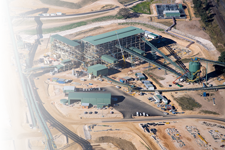

Froth Flotation
Overview
The beneficiation of ultra-fine coal can have a major impact on the profitability of an operation. In most coking coal and PCI plants, the highest value coal fraction can be found in the ultra-fines. Given the inconsistent nature of coal feeds, the difficulty involved in monitoring key performance parameters and operating conditions, and the wide range of specialty reagent products, flotation is often viewed as the most challenging component of any CHPP.
With the right combination of circuit design, instrumentation and reagent dosing, flotation can perform efficiently with relatively little operator input.
Poor Flotation Performance
Poor flotation performance can be attributed to many factors including:
a) Excessive bubble size due to low frother dosage;
b) Oxidised coal feed;
c) Poor froth mobility due to either excessive collector, excessive froth depth or poor wash water distribution and subsequent excessive drainage or low froth velocity; and
d) High slurry level and subsequent poor separation, high product ash and poor dewatering performance.
A number of significant problems can arise from poor flotation performance. These include yield loss, an over-specification product (ash or moisture) and product handleability issues, all of which result in adverse consequences such as lost product and contract sale price penalties or fines.
The consequences of yield loss can be extreme; for example for a 1000 t/h operation with 10% feed to flotation, a 5% swing in flotation yield can make a 25 t/h difference to production. For a coking coal mine selling at $180/t, this translates to a nominal revenue loss of $32million per year assuming 7100 hrs/annum.
QPS Services
QPS’s engineers can develop strategies to alleviate these problems by optimising reagents and reagent dosing systems, optimising flotation cell operating conditions, adjusting instrumentation and control systems to improve process control, or by reconfiguring entire flotation circuits.
QPS personnel have had extensive experience in coal flotation, from research, laboratory testwork and pilot plant operation, to flotation circuit design and full scale operation and improvement projects. Key areas of expertise include the design and management of:
- Reagent dosing;
- Instrumentation;
- Circuit redesign and optimisation;
- Froth handling;
- Residual frother streams;
- Wash water addition; and
- Valves and level control.